Online dating has become one of the most popular ways to meet new people and build meaningful relationships. Millions of singles across the United States, Canada, the United Kingdom, Australia, and many other countries use dating apps and websites every day. While online dating offers convenience and access to a larger pool of potential partners, it also comes with risks.
Unfortunately, scammers continue to target dating platforms to exploit users emotionally and financially. As technology advances, online dating scams have become more sophisticated, making it essential for users to understand how to recognize red flags and protect themselves.
This comprehensive guide explains the most common online dating scams in 2026, warning signs to watch for, and practical steps to stay safe while looking for love online.
Why Online Dating Scams Are Increasing
The growth of dating apps has created more opportunities for scammers to reach potential victims.
Several factors contribute to the increase in online dating fraud:
- Large numbers of users
- Easy creation of fake profiles
- AI-generated photos and messages
- International communication
- Emotional vulnerability of victims
Scammers often spend weeks or months building trust before attempting to steal money, personal information, or account credentials.
What Is a Romance Scam?
A romance scam occurs when someone creates a fake online identity and develops a relationship with a victim for financial gain.
The scammer’s goal is usually to:
- Request money
- Steal personal information
- Gain access to bank accounts
- Obtain gift cards
- Commit identity theft
These scams can affect people of all ages and backgrounds.
Common Online Dating Scams in 2026
1. Military Romance Scam
Scammers pretend to be military personnel stationed overseas.
They often claim:
- They cannot access their bank account
- They need money for travel
- They require emergency assistance
Many victims send thousands of dollars before discovering the deception.
2. Cryptocurrency Investment Scam
This is one of the fastest-growing online dating scams.
The scammer builds trust and then introduces an “investment opportunity.”
They may encourage victims to invest in:
- Cryptocurrency
- Forex trading
- Binary options
- Fake investment platforms
Initially, victims may see fake profits before losing their entire investment.
3. Emergency Money Request Scam
The scammer suddenly claims to face an emergency.
Common excuses include:
- Medical bills
- Travel expenses
- Family emergencies
- Legal problems
The goal is to persuade victims to send money quickly.
4. Catfishing Scam
Catfishing involves creating a fake identity using stolen photos and personal information.
The scammer may pretend to be:
- A model
- A doctor
- A business executive
- A military officer
Their profile often appears unusually attractive and successful.
5. Verification Code Scam
The scammer asks for a verification code sent to your phone.
They may claim:
- It’s needed to verify your identity
- It’s required for account security
In reality, they are attempting to gain access to your accounts.
6. Fake Dating Website Scam
Some scammers direct users to fraudulent dating websites.
These sites may:
- Collect payment information
- Steal personal data
- Require expensive memberships
Always research websites before providing financial information.
Major Red Flags to Watch For
Recognizing warning signs early can prevent significant losses.
They Move Too Fast
Scammers often express strong feelings very quickly.
Examples include:
- “I love you” after a few days
- Discussing marriage immediately
- Claiming a special connection instantly
Genuine relationships typically develop over time.
They Avoid Video Calls
Many scammers refuse video chats because their photos are stolen.
Common excuses include:
- Broken camera
- Poor internet connection
- Work restrictions
Repeated avoidance should raise suspicion.
They Ask for Money
This is the biggest warning sign.
Legitimate romantic interests do not ask strangers online for:
- Cash
- Gift cards
- Cryptocurrency
- Wire transfers
Any request for money should be treated with extreme caution.
Their Stories Don’t Add Up
Pay attention to inconsistencies.
Examples:
- Different ages
- Contradictory job descriptions
- Frequent changes in personal details
Scammers often struggle to maintain a consistent story.
They Want to Move Off the Dating App Quickly
Scammers frequently try to move conversations to:
- Telegram
- Signal
This helps them avoid platform monitoring systems.
How AI Has Changed Dating Scams
Artificial intelligence has made online scams more convincing than ever.
Scammers now use AI for:
Fake Profile Photos
AI-generated images can appear completely realistic.
Automated Conversations
AI chat tools help scammers communicate with many victims simultaneously.
Deepfake Videos
Advanced technology can create realistic fake video content.
Because of these developments, users should be more cautious than ever.
How to Verify Someone You Meet Online

Conduct a Reverse Image Search
Upload profile photos to a search engine.
This can help identify:
- Stolen images
- Fake identities
- Duplicate profiles
Request a Video Call
A live video conversation is one of the most effective verification methods.
Scammers often avoid real-time interactions.
Check Social Media Profiles
Look for:
- Long account history
- Consistent activity
- Genuine interactions
Recently created profiles may indicate fraud.
Verify Employment Claims
If someone claims to work for a well-known company, check whether their professional information appears legitimate.
Best Safety Practices for Online Dating
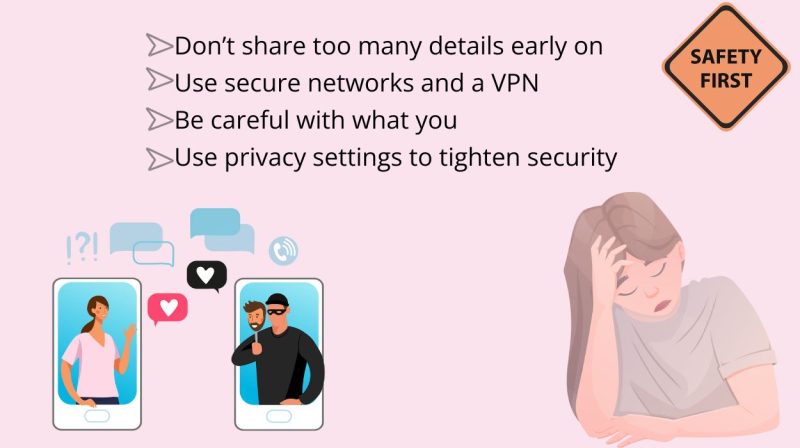
Keep Personal Information Private
Avoid sharing:
- Home address
- Banking information
- Social Security numbers
- Passport details
- National ID numbers
Use Secure Passwords
Protect dating accounts with:
- Strong passwords
- Two-factor authentication
This reduces the risk of account compromise.
Meet in Public Places
When meeting someone for the first time:
- Choose a public location
- Inform a trusted friend
- Arrange your own transportation
Safety should always come first.
Trust Your Instincts
If something feels suspicious, take it seriously.
Many victims later report noticing warning signs before becoming involved in a scam.
What To Do If You Suspect a Scam
Stop Communication
Immediately stop responding to suspicious messages.
Block the Profile
Most dating apps provide blocking tools.
Report the Account
Report suspicious activity to the dating platform.
Protect Your Accounts
Change passwords if you shared any sensitive information.
Contact Financial Institutions
If money was sent, notify your bank immediately.
Most Common Lies Used by Dating Scammers
Scammers often claim to be:
- Military officers
- Doctors working abroad
- Oil rig workers
- Engineers
- Business executives
- International contractors
These professions are commonly used because they provide excuses for being unavailable in person.
Safe Dating Apps in 2026
While no platform is completely scam-free, several apps invest heavily in security.
Popular platforms include:
- Bumble
- Hinge
- Match
- eHarmony
- Coffee Meets Bagel
- OkCupid
Look for apps that offer:
- Photo verification
- Identity checks
- Scam detection systems
- User reporting tools
Frequently Asked Questions
Are Online Dating Scams Common?
Yes. Millions of dollars are lost globally each year through romance scams and online dating fraud.
Can Scammers Use Real Photos?
Yes. Many scammers steal photos from social media accounts or use AI-generated images.
Is It Safe to Date Online?
Yes, provided users follow safety precautions and remain alert to warning signs.
Should I Send Money to Someone I Met Online?
No. Sending money to someone you have never met in person is one of the most common causes of online dating fraud.
Conclusion
Online dating can be a fantastic way to meet new people and build lasting relationships, but it is important to stay vigilant. Scammers continue to develop increasingly sophisticated tactics, including AI-generated photos, fake identities, and cryptocurrency investment schemes.
By recognizing common red flags, verifying identities, protecting personal information, and refusing financial requests, users can dramatically reduce their risk of becoming victims. The key to safe online dating in 2026 is patience, caution, and healthy skepticism.
Remember: genuine relationships are built on trust, honesty, and time—not urgent requests for money or unrealistic promises. Staying informed and following basic safety practices can help you enjoy the benefits of online dating while protecting yourself from scams.